First Aid Training for Drivers in Latvia
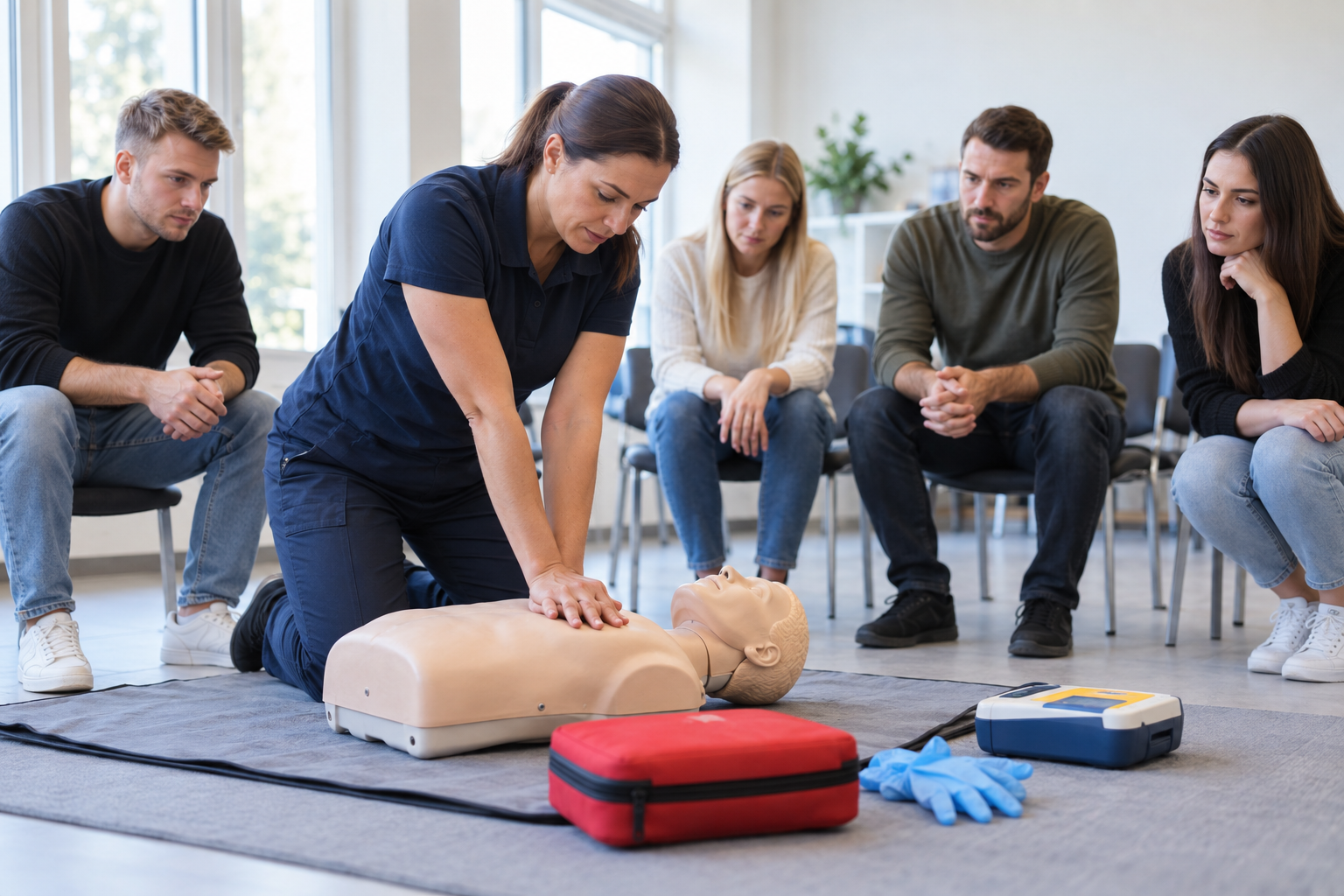
First aid training for learner drivers is more than a formality required for obtaining a driving licence. It teaches people to assess an accident scene safely, call the emergency services and take actions that may help preserve a casualty’s life until professional assistance arrives. In Latvia, the programme intended for drivers includes theory, practical exercises and an assessment.
Older online articles may still describe a former system of course levels and differently coloured certificates. The current system is based on nationally approved programmes and is supervised by the State Emergency Medical Service of Latvia, known as NMPD. When choosing a course, check that the provider is authorised to deliver the programme for drivers with the required assessment.
Is first aid training compulsory for drivers in Latvia?
A person seeking a driving qualification must have completed the relevant first aid programme. Before a driving licence is issued, information about successful completion must normally be available in the national information system or supported by another document accepted under the applicable rules.
A valid first aid qualification may also be required when an existing driver applies for an additional licence category after the earlier training has expired. However, the expiry of the first aid certificate does not normally invalidate a driving licence that has already been issued if the driver is not applying for another category.
An exemption may apply to people with appropriate secondary or higher medical education, as well as certain students in the relevant programmes. The education document must be recognised and recorded by CSDD, so applicants should confirm whether their particular document qualifies before booking the driving tests.
How long is the first aid course for drivers?
Drivers and people who possess or carry firearms take the basic first aid programme with an assessment. The total programme is 15 academic hours:
- six academic hours of theoretical training;
- six academic hours of practical skills training;
- three academic hours for the written theory and practical assessment.
One academic hour is 45 minutes. NMPD states that the programme with assessment lasts at least 11 hours and 15 minutes in ordinary clock time. A provider may divide the programme between different days, but the required practical component cannot be replaced by a short theory video.
Presto’s first aid courses are open both to Presto driving-school students and to other applicants. Depending on the selected group, theory may be delivered remotely, while practical skills must be learned in person under the supervision of a certified instructor.
What is covered during first aid training?
The programme does not train participants to work as healthcare professionals. Its purpose is to teach a safe and structured response when urgent help is needed and the emergency services have not yet arrived.
The theory and practical sessions cover:
- safety and priorities at the scene of an accident;
- assessment of a casualty and calling the emergency services;
- helping an unconscious person who is breathing normally;
- resuscitation when a casualty is not breathing;
- use of an automated external defibrillator;
- control of severe bleeding and application of a pressure dressing;
- action when a person is choking;
- burns, hypothermia, overheating and other thermal injuries;
- electrical injuries, chemical incidents and drowning;
- trauma, amputations and embedded foreign objects;
- sudden illness, including chest pain, stroke, seizures and diabetic emergencies;
- road traffic collisions and the minimum contents of a first aid kit.
The current programme and assessment requirements are published on the NMPD first aid training page.
Why is the practical session compulsory?
Reading an emergency algorithm does not guarantee that a person will be able to perform it correctly under stress. During practical training, each participant works with a manikin and practises placing a casualty in the recovery position, controlling bleeding, applying dressings and responding to choking.
Drivers must also understand how to approach a road collision without becoming another casualty. Traffic, fire, fuel, electricity and unstable vehicles may create immediate danger. Training therefore places strong emphasis on the rescuer’s own safety and on giving accurate information when calling the emergency services.
The programme may also include practice in removing a casualty from a vehicle and taking off a motorcyclist’s helmet. These actions should not be performed automatically in a real incident; they are used only in particular circumstances explained during the course.
How is first aid knowledge assessed?
The assessment for the driver programme has three parts:
- Theory test. It contains 20 questions. At least 80 per cent must be answered correctly, which means a minimum of 16 correct answers.
- Resuscitation skills test. The participant demonstrates resuscitation on an adult manikin in a scenario where the casualty is unconscious and not breathing.
- Additional practical skills test. The participant demonstrates one of the other first aid algorithms covered during training.
If a section is not passed, the participant must arrange a reassessment with the training provider. Current course dates, fees and reassessment conditions are available on Presto’s registration page.
How long is a first aid certificate valid?
A first aid training certificate is valid for five years from its date of issue. The national system stores information about the completed programme and the validity period.
A driver does not normally have to retake the course every five years merely to continue driving in a category already held. Valid training will be required when the rules make it a condition of a new application, such as applying for an additional driving category. Even where renewal is not legally required, refreshing the skills is valuable because guidance changes and practical ability deteriorates without practice.
Is the certificate available electronically?
Details of completed first aid training are entered into the national first aid training information system. NMPD explains that residents can use an e-service on Latvija.gov.lv to view training information, follow the certificate’s validity and obtain an electronically usable confirmation when necessary.
After completing the course, check that your name and personal details have been recorded correctly. If CSDD cannot see the training information, contact the organisation that registered your course.
How should you choose a first aid course?
Price and the shortest advertised schedule should not be the only criteria. Check:
- whether NMPD has authorised the organisation to provide first aid training;
- whether the programme is the version for drivers with an assessment;
- whether the full theoretical and practical programme is provided;
- whether every participant has sufficient opportunity to practise;
- which language is used for teaching and assessment;
- what is included in the fee and how much a reassessment costs;
- when successful completion will be entered into the information system.
Under the Latvian regulations on first aid training, NMPD supervises and coordinates the system. Courses must be delivered by an authorised training organisation and certified first aid instructors.
How can you prepare for the course and assessment?
- Provide your full name and personal identity number accurately when registering.
- Check the dates and the address of the in-person practical session.
- Study the theory before practical training instead of waiting until the test.
- Practise resuscitation, the recovery position and bleeding control yourself.
- Ask the instructor about any situation in which the order of actions is unclear.
- Arrive on time for the assessment and bring the identity document specified by the provider.
Obtaining a driving licence also requires a valid medical examination. If this has not yet been completed, you can book a driver’s medical examination with Presto.
Frequently asked questions
Can the first aid course be completed entirely online?
No. Theory may be organised remotely, but practical skills and assessment must be completed in accordance with the programme. Resuscitation and other physical techniques cannot be learned only by watching a video.
How many questions are in the first aid test?
The theory test has 20 questions. At least 80 per cent, or 16 questions, must be answered correctly.
Is passing the written test enough?
No. Participants must also demonstrate resuscitation on a manikin and perform one additional practical algorithm covered during the course.
How long is the certificate valid?
It is valid for five years from the date of issue.
Must the course be repeated when the certificate expires?
Not merely to continue driving in a category already held. Valid training may be required when applying for an additional driving category or another document for which first aid training is compulsory.
Can someone who is not a Presto student enrol?
Yes. Presto first aid training is open to people who are not studying for a driving category at Presto.
Are the first aid course and the driver’s medical certificate the same?
No. The course teaches emergency response skills, while the medical examination assesses whether a person’s health meets the requirements for driving. Both may be required before a driving licence is issued.
Where can I enrol?
Select the city, language and suitable group on Presto’s first aid training page. Current dates, venues and fees are shown there.